
| |||||||||||
| |||||||||||
Recommended Reading: Reviews of Books on Free-Range Eggs, Pastured Broilers, and Small-Scale Poultry Farming
by Robert Plamondon, robert@plamondon.comI've written reviews for my favorite poultry and small-scale farming books. All of these are well worth reading. With a few exceptions (due to heart-stopping cover prices), all are worth buying.
For your convenience, I've provided links to Amazon.com for those books that Amazon has heard of, in case you feel like ordering them, or if you want to read other people's reviews. I buy a lot of books from Amazon. They're my favorite bookseller.
For out-of-print books, I've provided links to Abebooks.com, which is where I buy most of my hard-to-find books.
It is becoming increasingly hard to find classic, out-of-print poultry books. Hobbyists and small-scale farmers are rediscovering them, and the upshot is that these books are harder to find and more expensive than they used to be. I started Norton Creek Press largely to make old classics available again, and I will be bringing out additional titles as time permits.
In-Print Poultry Books
Small-Scale Farming Books
Out-of-Print Poultry Books
Non-Books (Useful Gear for Around the Farm)
And, just for fun, a non-poultry book by me
|
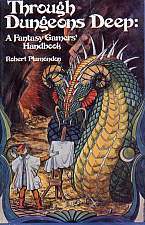
Through
Dungeons Deep : A Fantasy Gamers' Handbook, by Robert Plamondon.
Reston Publishing, 1981. Amazon.com average rating: 
Not relevant to poultry in any way! I wrote this book while I was in college, as a practical guide to people playing Dungeons and Dragons and simlar fantasy role-playing games. It has become collectible, with used copies selling for at least twice the original cover price and getting five-star reviews at amazon.com. http://www.through-dungeons-deep.com/index.html It's the book that refuses to die! And for good reason (if I do say so myself): it's the best guide on what role-playing games are all about and how to get started. I've brought it back into print through my Norton Creek Press label. |
In-Print Poultry Books
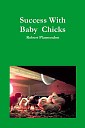
The books in this list cover everything from backyard poultrykeeping to full-scale commercial operation. I've thrown in a few tangentially related books, too, such as The Egg and I and 365 Ways to Cook Chicken.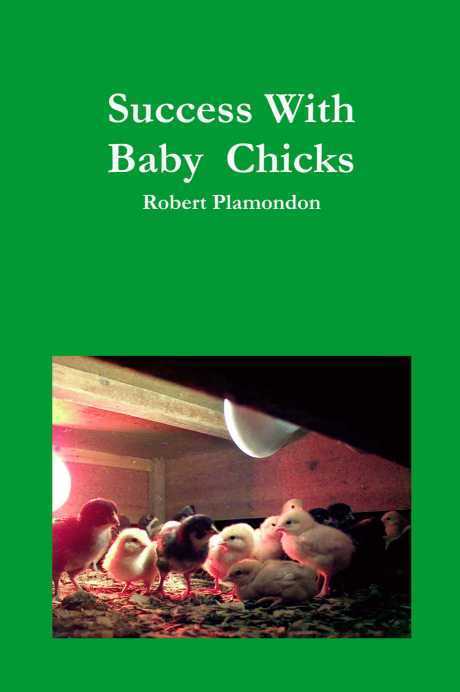 Success With Baby
Chicks, by Robert Plamondon. Norton Creek Press, 2003. (Hey, that's
me!) Amazon.com average rating: This 155-page book is the most comprehensive guide to
raising chicks that I've ever seen, if I do say so myself. It's the outgrowth of
a great deal of trial and error and almost as much library research. It reveals
all sorts of practical ways of getting your day-oldchicks safely through the
brooding period, and includes many Lost Secrets of the Ancient Master of Poultry
that have been forgotten since the decline of small farm flocks in the Fifties.
See the
description here. You can order this book directly from
me, or from Amazon.com.
Success With Baby
Chicks, by Robert Plamondon. Norton Creek Press, 2003. (Hey, that's
me!) Amazon.com average rating: This 155-page book is the most comprehensive guide to
raising chicks that I've ever seen, if I do say so myself. It's the outgrowth of
a great deal of trial and error and almost as much library research. It reveals
all sorts of practical ways of getting your day-oldchicks safely through the
brooding period, and includes many Lost Secrets of the Ancient Master of Poultry
that have been forgotten since the decline of small farm flocks in the Fifties.
See the
description here. You can order this book directly from
me, or from Amazon.com.
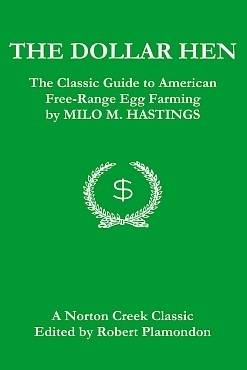 The Dollar Hen,
Milo Hastings, Arcadia Press, 1909. Reprinted by Norton Creek
Press, April, 2003. This is my favorite poultry book. It covers free-range
poultrykeeping and practical poultry farming in a concise, practical manner, and
provided me with useful knowledge and inspiration 90 years after its
publication. Hastings became the poultry scientist at the Kansas Experiment
Station, but was given no facilities for poultrykeeping experiments. So he
decided to do a survey of how the poultry industry actually operated, from
actual farm practices through wholesalers to retailers to the end user. This
gave him a practical understanding of all aspects of the industry, which he
imparts with vigor and acid humor. Hastings totally lacks the romanticism and
impracticality of most poultry writers, and goes out of his way to kick them in
the pants a few times. Hastings is also the only poultry scientist to write a
classic work of science fiction (City of
Endless Night, 1919). He later became active in the "physical culture"
health-food and exercise movement of the 1920s. This original edition is almost
impossible to find, but my reprint edition is readily available from me and from Amazon.com.
The Dollar Hen,
Milo Hastings, Arcadia Press, 1909. Reprinted by Norton Creek
Press, April, 2003. This is my favorite poultry book. It covers free-range
poultrykeeping and practical poultry farming in a concise, practical manner, and
provided me with useful knowledge and inspiration 90 years after its
publication. Hastings became the poultry scientist at the Kansas Experiment
Station, but was given no facilities for poultrykeeping experiments. So he
decided to do a survey of how the poultry industry actually operated, from
actual farm practices through wholesalers to retailers to the end user. This
gave him a practical understanding of all aspects of the industry, which he
imparts with vigor and acid humor. Hastings totally lacks the romanticism and
impracticality of most poultry writers, and goes out of his way to kick them in
the pants a few times. Hastings is also the only poultry scientist to write a
classic work of science fiction (City of
Endless Night, 1919). He later became active in the "physical culture"
health-food and exercise movement of the 1920s. This original edition is almost
impossible to find, but my reprint edition is readily available from me and from Amazon.com.
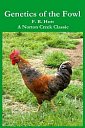
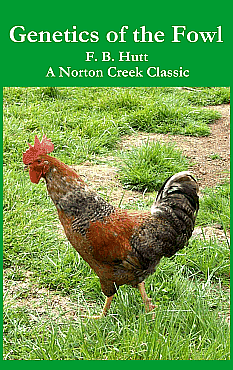 Genetics of the
Fowl, by F. B. Hutt. Norton Creek Press, 2003. This book is the
bible of chicken breeders. Long out of print, I have just brought it back as one
of the Norton Creek Classics. Hutt was an amazing man. He did pioneering work on
a number of aspects in animal breeding, including work on selecting for disease
resistance. The book dates back to 1949, but it is sufficiently up to date for
the poultry fancier or the practical poultrykeeper. The only sizable omission is
the lack of information on modern hybrid broilers, which were developed after
1949. Still, this book is infinitely more readable than the works that have been
written since, and is also much more affordable. See the description
here. You can order this book directly from
me or from Amazon.com.
Genetics of the
Fowl, by F. B. Hutt. Norton Creek Press, 2003. This book is the
bible of chicken breeders. Long out of print, I have just brought it back as one
of the Norton Creek Classics. Hutt was an amazing man. He did pioneering work on
a number of aspects in animal breeding, including work on selecting for disease
resistance. The book dates back to 1949, but it is sufficiently up to date for
the poultry fancier or the practical poultrykeeper. The only sizable omission is
the lack of information on modern hybrid broilers, which were developed after
1949. Still, this book is infinitely more readable than the works that have been
written since, and is also much more affordable. See the description
here. You can order this book directly from
me or from Amazon.com.
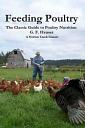
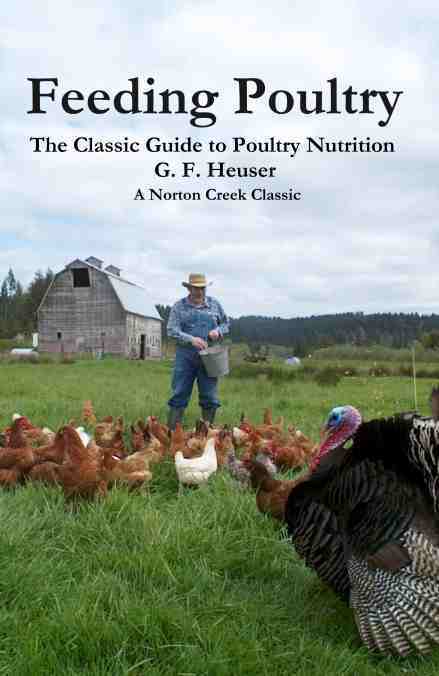 Feeding Poultry: The
Classic Guide to Poultry Nutrition, by G. F. Heuser. Norton Creek Press,
2003. Another of our Norton Creek Classics. Like Hutt, Heuser was a
poultry scientist at Cornell University during the early days of poultry
research. Feeding Poultry is a reprint of the 1955 second edition, which
retained all of the earlier material on subjects such as the nutritional value
of free range, while adding new material on topics like vitamin B-12 and
high-energy rations. Thus we get the best of the old lore plus the best of the
new. Much more readable than the usual nutrition book. See the description
here. You can order this book directly from
me or from Amazon.com.
Feeding Poultry: The
Classic Guide to Poultry Nutrition, by G. F. Heuser. Norton Creek Press,
2003. Another of our Norton Creek Classics. Like Hutt, Heuser was a
poultry scientist at Cornell University during the early days of poultry
research. Feeding Poultry is a reprint of the 1955 second edition, which
retained all of the earlier material on subjects such as the nutritional value
of free range, while adding new material on topics like vitamin B-12 and
high-energy rations. Thus we get the best of the old lore plus the best of the
new. Much more readable than the usual nutrition book. See the description
here. You can order this book directly from
me or from Amazon.com.
 Chickens
in Your Backyard: A Beginner's Guide, by Rick and Gail Luttmann. Rodale
Press, 1976. This book is a perennial favorite, and why not? It's fun to read,
it's inspirational, it's relatively brief, and it's inexpensive. If you've kept
poultry before, you can probably skip this one (buy Storey's Guide to Raising
Poultry, below, instead). But if you're a beginner to backyard poultry,
start here.
Chickens
in Your Backyard: A Beginner's Guide, by Rick and Gail Luttmann. Rodale
Press, 1976. This book is a perennial favorite, and why not? It's fun to read,
it's inspirational, it's relatively brief, and it's inexpensive. If you've kept
poultry before, you can probably skip this one (buy Storey's Guide to Raising
Poultry, below, instead). But if you're a beginner to backyard poultry,
start here.
Storey's
Guide to Raising Poultry: Breeds, Care, Health , by Leonard S. Mercea.
Storey Publishing, 2000. Originally published as Raising Poultry the Modern
Way. A wide-ranging overview of raising chickens, turkeys, ducks, and geese.
One of the few books still in print that was written for a general audience by
an Extension Poultry Specialist.
Pastured
Poultry Profits, by Joel Salatin. Chelsea Green Pub. Co., 1996. If you're
thinking about raising meat chickens, even just for your own use, you should
read this book. It gives step-by-step instructions for raising pastured broilers
as a sustainable small-farm business. Designed for beginners, Salatin's methods
really work. We've used them on our farm for years.
Chicken
Tractor : The Permaculture Guide to Happy Hens and Healthy Soil, by Andy Lee
and Pat Foreman. Good Earth Publishing, 1998. This book complements Pastured
Poultry Profits. Where Pastured
Poultry Profits focuses on step-by-step detail of how the author does
things on his own farm, Chicken
Tractor discusses many different practices on many different small
farms. A great source of ideas. (Be wary of the authors' vaguely described
portable chicken pen design, though -- it is heavy, yet flimsy.)
Storey's
Guide to Raising Ducks: Breeds, by Dave Holderread. Storey Publishing, 2000.
Previously published as Raising The Home Duck Flock. Dave's waterfowl
hatchery is just a few miles from my farm and we've been very happy with
the waterfowl we've bought from him. His book is also excellent, going into
detail on every aspect of duck raising. Highly recommended.
365
Ways to Cook Chicken, by Cheryl Sedaker. Harper/Collins, 1996. This is an
excellent cookbook that gets high marks from everybody. If you eat as much
chicken as we do, this book is an absolute necessity. Even if you don't, it adds
power to your arsenal of cookbooks.
The Egg
and I, by Betty MacDonald. The classic tale of Betty MacDonald's life on a
remote egg farm in Washington. It actually spends very little time talking about
poultry, but it's a wonderful book that's well worth reading. Betty's other
autobiographical books (Anybody
Can Do Anything and The
Plague And I) have also been reissued recently. Both are excellent.
Commercial
Chicken Production Manual, Commercial
Chicken Meat and Egg Production, by Mack North and Donald Bell or Donald
Bell and William Weaver. These are two successive editions of the same book, a
massive reference to current commercial chicken practices. This book is
expensive, but it answers a lot of questions if you're raising chickens
commercially, even on a small scale. Maybe you can find it used for a reasonable
price. Not appropriate for the backyarder (different focus, too expensive).
Small-Scale Farming Books
These books are of interest to most people with small farms. All are excellent.The
Encyclopedia of Country Living, by Carla Emery. Ninth Edition. Sasquatch
Books, 1990. A monumental work with sections on just about everything, from
livestock care to cooking, mixed with homespun philosophy. You can open it up at
any point and start reading, and you'll be hooked. The poultry section (which
I'm best qualified to comment on) is very well thought-out and practical.
You Can
Farm : The Entrepreneur's Guide to Start and Succeed in a Farming
Enterprise, by Joel Salatin. Polyface, 1998. This is Joel Salatin's guide
for getting started in farming. It came out after we'd been on the farm for
several years, and it matches up very well with our own experiences. Too bad it
hadn't been written before we started! Highly recommended for
those who are even toying with the idea of farming.
Five
Acres and Independence : A Handbook for Small Farm Management, by M. G.
Kains. Dover Publishing. A classic guide to making a living from a very small
farm. Kains emphasized the importance of direct marketing decades before it
became an industry buzzword. He recommends a diversified farm with a succession
of products throughout the season, with "anchor" products of greenhouse plants,
berries, fruit, and eggs.
|
|
Greener
Pasture on Your Side of the Fence, by Bill Murphy. A practical, accessible
guide to rotational grazing based on the ideas of Andre Voisin. Rotational
grazing can triple the grass yield of a pasture and reduce the livestock's
exposure to parasites and disease. This book complements Joel Salatin's Salad
Bar Beef, which focuses on the step-by-step implementation of Voisin's
principles on his farm.
|
|
|
Grass
Productivity, by Andre Voisin. While we're at it, why not read the original?
This is a fascinating book, full of insight, though not as easy to read as
Murphy's book. |
|
|
Salad
Bar Beef, by Joel Salatin. Polyface, 1996. As in Pastured
Poultry Profits, Salatin provides detailed step-by-step descriptions of how
he operates his farm -- this time, in his cattle operation. He describes
everything from the details of electric fence management to how he
direct-markets his beef to his customers.
|
|
|
Growing Organic Vegetables West of the Cascades, by Steve Solomon. Pacific Search Press, 1985.
A fascinating book about how Steve Solomon figured out how to grow all of his own food without
irrigation on a farm in Western Oregon, which typically has a total drought from early July through
mid-September. Solomon rediscovered a number of techniques used by old-time farmers. Full of
practical tips of all kinds.
|
|
|
Waterhole:
How to Dig Your Own Well, by Bob Mellin. A short but fascinating book on how
to dig a 4 in. diameter shallow well with hand tools. If you follow the
instructions, you will have a professional-quality well for practically no
investment. This charming book gives you a thorough grounding in the basics of
well construction. The farm applications are obvious, and the benefits are also
very real for gardeners or people with large areas of lawn who do not want to
pay for city water. |
|
| Out of the Crisis, by W. Edwards Deming. Okay, it's not a farming book, but its common-sense application of statistical methods to quality-control problems is very interesting, with innumerable applications to any business, not least a quality-oriented farm. Also, I am always amused at how Deming gives managers a hard time for griping about subordinates when the real problems have generally been built into the system, and only management can rip them out again. |


Search Boxes
Here, for your comfort and convenience, are some search boxes for various booksellers.
|
|
|
Out-of-Print Poultry Books
Some of these books have been out of print for more than fifty years, but they are still valuable references, especially to people with small flocks. Small flocks used to be the norm, and the first fifty years of research by poultry scientists focused on the needs of small flocks and small farms. Poultrykeeping on a small scale hasn't changed much over the years. Also, the poultry books of yesteryear were aimed at a more general audience, not highly trained specialists.
To find out-of-print books, I rely on . Some of these books can be found at almost any time, but for others you'll want to set up an item in your "want list" so you'll get an e-mail when one becomes available. So far, this has always worked for me within a few months. Even the most obscure books hit the on-line booksellers once in a while.
Poultry
Breeding and Genetics, R. D. Crawford, Editor. Elsevier Science, 1990.
Though expensive and out of print, this is the
definitive reference to poultry genetics. A must for the affluent poultry
breeder. This book is a compendium of chapters written by different authors, and
is not aimed at the interested layman, but it is thorough. Hutt's Genetics
of the Fowl is a much better read and is readily available.
Commercial Poultry Nutrition, by Steven Leeson and John D. Summers. University Books, Ontario, 1997. An excellent reference book for anyone who wants to invent his own poultry rations and can afford the book's high price, though out of print and hard to find. The focus is on the creation of practical poultry feeds, not the esoterica of poultry digestion. Quite readable and accessible, given the subject matter.
Successful Poultry Management, Morley A. Jull, McGraw-Hill,
1943. This is one of the best all-around poultry books. Easy to read and
comprehensive. It is especially useful to people who want to raise and sell
eggs. Good sections on culling, marketing, and on business considerations. Buy From Abebooks
Poultry Breeding and Management, James Dryden, Orange Judd
Press, 1916. Dryden was the first person to prove that chickens could be bred
successfully for higher egg production (earlier attempts by other scientists had
failed). His experiments took place a few miles from my farm, on the campus of
what was then Oregon Agricultural College, but is now Oregon State University. The book is really two
books in one, with independent sections on breeding and management. While the
breeding section is fascinating, it's the managment section that makes the book
worth seeking out. Like Hastings, Dryden was keenly aware of the realities of
farm poultry flocks, and devotes several hundred pages to practical advice. At
the time, most farm flocks were given free range, and this book is an invaluable
reference for free-range and backyard poultrykeepers today. American farmers
obviously thought so, too, since the book remained in print for over thirty
years in spite of never being updated. This book is increasingly hard to find on
used-book Web sites. Buy From Abebooks
Turkey Management, Stanley Marsden and J. Holmes Martin, The
Interstate, 1939. This is the book for raising turkeys, especially
in small flocks or on free range. This book is crammed full of useful
information and techniques. I've even applied some of their advice to my chicken
flock with good results. This book is fairly easy to find on used-book web
sites, though it is becoming expensive. Buy From Abebooks
Poultry Breeding, A. L. Hagedoorn and Geoffrey Sykes. Crosby
Lockwood, 1953. A clear, insightful, practical, and engaging book covering all
aspects of practical poultry breeding. It covers both utility strains and show
birds, and shows a deep understanding of the different needs of these two types.
Hard to find. Hagedoorn's Animal Breeding is easier to find and
almost as useful to the poultrykeeper. Buy From Abebooks
The Henyard, Geoffrey Sykes, Crosby Lockwood, 1952. In this
forgotten book, Sykes puts forth a simple technique for avoiding the mud and
disease that are the result of keeping hens in fenced yards. His solution? Put
down lots and lots of straw over the entire yard. It eliminates mud and keeps
the chickens clean. The hens love foraging for sprouted weed seeds. And you can
clear out all the straw once a year with a tractor and start over, limiting the
amount of nutrient runoff and pathogen build-up. Full of practical, insightful
tips. Buy From Abebooks
Audiobooks
Although I like farming, much of the time spent in chores and driving can be tedious. To keep my brain busy, I listen to a lot of audiobooks. The cheapest source of audiobooks is your local library. My experience is that many of the best books are never actually on the shelves. People put a "hold" on them and they pass from one library patron to another this way without ever touching the shelves -- so use the card catalog to see what they've really got.For titles you can't get for free, there are many companies that sell audiobooks on cassette or CD, such as Books on Tape, Recorded Books, or Blackstone Audio Books. Most of the audiobook companies are also getting into digitally recorded books that can be played on MP3 players, which I will say more about in a minute.
I only listen to unabridged recordings, which can be quite expensive on tape or CD. Many companies have a mail-order rental program, which is worth considering for those books you really want to listen to.
Audible.com
Another option is Audible.com, which I recommend. Audible.com is basically a book club that allows you to download one or two books per month for a low price per book -- cheaper than renting tapes, in fact. I've been a member since 2001, and listen to digital audiobooks from Audible.com every day on my iPod Touch.One nice thing about Audible.com is that you can re-download your audiobooks if you delete them from your computer.
Hear two books for just $9.95 from Audible
Rugged Audio


With no moving parts, it's pretty rugged right out of the box, but it's not waterproof and can break if you drop it. But it's pretty safe in a shirt pocket. I
added a silicone rubber cover
(PDO TopSkin)

Bottom line is that my iPod Touch has been running flawlessly for a year and a half of constant use outdoors, and I'm extremely pleased overall.
If you're on a budget, I recommend the iPod Nano


 Panasonic
RQSW44V Yellow AM/FM Personal Cassette Player. Second verse, same as the
first. I like to listen to books on tape while doing chores [Update: I use an iPod for this
almost exclusively these days), and a Walkman-style
tape player is essential for this. I've destroyed several in the past few years.
One fell out of my pocket while I was on the tractor, and the bush hog mowed it
for me. (The people at the library thought this was the most entertaining, "the dog at your tape" storey
they'd ever heard!). But most of them die due to getting cruddy inside in ways I can't clean
out. This model is a compact ruggedized tape player that's supposed to be better
in such applications. I haven't used this specific model, but I've gotten great
service out of a very similar non-ruggedized version. The tape players in this
product line play tapes for at least 25 hours on a single AA battery! And
they're small enough to fit easily in a shirt pocket. Highly recommended.
Panasonic
RQSW44V Yellow AM/FM Personal Cassette Player. Second verse, same as the
first. I like to listen to books on tape while doing chores [Update: I use an iPod for this
almost exclusively these days), and a Walkman-style
tape player is essential for this. I've destroyed several in the past few years.
One fell out of my pocket while I was on the tractor, and the bush hog mowed it
for me. (The people at the library thought this was the most entertaining, "the dog at your tape" storey
they'd ever heard!). But most of them die due to getting cruddy inside in ways I can't clean
out. This model is a compact ruggedized tape player that's supposed to be better
in such applications. I haven't used this specific model, but I've gotten great
service out of a very similar non-ruggedized version. The tape players in this
product line play tapes for at least 25 hours on a single AA battery! And
they're small enough to fit easily in a shirt pocket. Highly recommended.
Farmers' Market Equipment
 Brother
LX900 Cool Laminator (LX-900). We couldn't get through the farmer's market
season without this nifty little laminator. In just a few seconds, you can
laminate a sign for your farmer's market booth, making it long-lasting and
waterproof. There's nothing sadder than a colorful market sign made illegible by
a few drops of water. This laminator is very easy to use and doesn't require
heat for operation.
Brother
LX900 Cool Laminator (LX-900). We couldn't get through the farmer's market
season without this nifty little laminator. In just a few seconds, you can
laminate a sign for your farmer's market booth, making it long-lasting and
waterproof. There's nothing sadder than a colorful market sign made illegible by
a few drops of water. This laminator is very easy to use and doesn't require
heat for operation.
[Update: This unit has been discontinued, though supplies are still plentiful. What can Brother be thinking of?]
| Get My Free Newsletter! | ||||
|
Farm & Poultry Pages
Main Page |
||||
|
My Other Sites
Norton Creek Farm |
||||
|
Read My Books!
I publish books that I believe in, under the Norton Creek Press label. |
||||
|
|
ogle Code for Remarketing Tag -->
 ogle Code for Remarketing Tag -->